The Emma Neuroscience Group uses a wide range of techniques to assess brain structure and function. The following techniques belong to the core methodologies that are used by multiple researchers in the team across settings, populations and/or diagnostic groups.
Neurocognitive Testing
Neurocognitive testing is the cornerstone of our work and therefore, we developed structured methodology for this purpose. The Emma Toolbox for Neurocognitive Functioning is developed to assess neurocognitive functioning in children and adults from age 6 years onwards, providing a comprehensive neurocognitive profile assessing information processing, attention control, verbal and visual memory, verbal and visual working memory and visutomotor integration. We make use of advanced computational models to extract clinically relevant information from raw neurocognitve data.

Neuroimaging
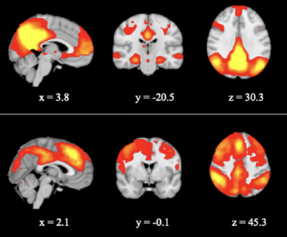
The Emma Neuroscience Group develops a pipeline for multimodal advanced MRI techniques to provide a comprehensive assessment of brain structure and functioning. With assessments of volumes, white matter integrity, structural and functional connectivitty and neurometabolites, the pipeline provides a framework for deep phenotyping of brain development and the impact of disease.
Eyetracking
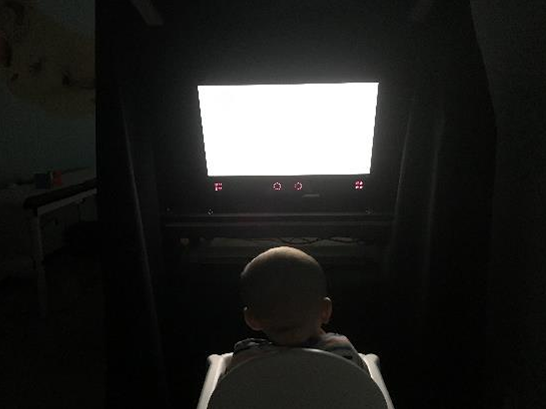
Neurocognitive testing is our primary methodology to assess brain functioning in children. But how to measure neurocognitive functioning when children are too young to understand test instructions or produce a consistent behavioral response? We develop eyetracking methodology for assessment of fundamental processes underlying neurocognitive functioning in babies and infants from between 6 and 24 months of age.
Data-Driven Care Innovation
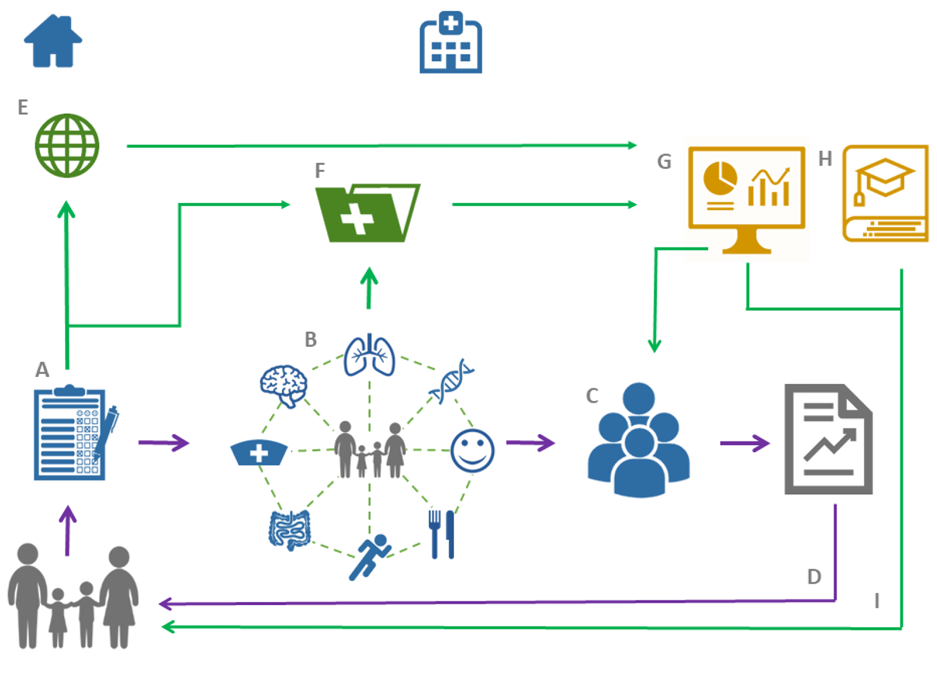
An important part of our research is integrated in the Follow Me Program for data-driven care innovation. The Follow Me program aims to improve follow-up care for complex pediatric patient populations by developing multidisciplinary care paths with structured clinical data registrations. The resulting high-quality clinical databases are leveraged for systematic care evaluation and scientific research aimed at the transition to precision medicine. Consequently, the Follow Me program methodology provides the foundational infrastructure for Learning Heath Systems.
Data Science
One of our central goals is to better understand and predict the outcome of disease. In the majority of pediatric conditions, outcome disease is determined by complex interactions between premorbid patient characteristics, clinical factors and environmental modifiers. We investigate the value of state-of-the-art data science to better capture the complexity of outcome determination.